

آخر التطورات
عد الى الخلف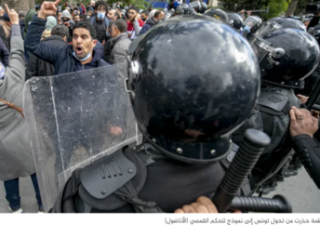
Tunisia: The ongoing crackdown against dissidents continues
Association
In November 2025, the Tunisian League for the Defense of Human Rights (LTDH) publicly condemned the government’s decision to suspend the activities of 14 human rights organizations, while approximately 600 national, regional, and international NGOs face the threat of similar suspension. Among the affected organizations are the Tunisian Association of Democratic Women (ATFD), the Tunisian Forum for Economic and Social Rights (FTDES), and the World Organization Against Torture (OMCT), which focus respectively on women’s rights, the rights of migrants, and the protection of LGBTQI+ individuals. Authorities have accused these organizations of being financed by foreign interests, a claim widely criticized by civil society as part of an effort to restrict independent human rights advocacy.
However, the situation has also shown signs of easing in some cases, as several NGOs have been allowed to resume activities and detained staff members have been released. January 5th, 2026 marked the release of NGO Terre d’Asile Tunisie staff, including Sherifa Riahi, Mohamed Joo and Imen Ouardani after being sentenced for two years. They have been put in 20 months pre-trial detention for their work in supporting asylum-seekers, refugees and migrants. This measure has been welcomed by the Observatory for the protection of Human Rights Defenders (OMCT) and by the International Federation for Human Rights.
Expression
The European Union adopted a resolution calling for the release of individuals detained in Tunisia for peacefully exercising their right to freedom of expression, raising alarm over the ongoing crackdown on dissent. This move came amid a wave of heavy prison sentences issued the same day. On 27 November 2025, the Tunis Appeal Court sentenced 34 defendants to prison terms ranging from 5 to 45 years in the so-called “Conspiracy Case” and under broad charges such as “spreading false news.” Those convicted include political opponents, lawyers, and human rights activists, notably Chaima Issa, human rights lawyer Ayachi Hammami, and Ahmed Nejib Chebbi, co-founder of the National Salvation Front, who received sentences of 20, 5, and 12 years respectively. The convictions were issued under Tunisia’s Penal Code and the 2015 Counterterrorism Law, on accusations of attempting to destabilize the state. Several defendants were denied the right to appear physically in court, instead being compelled to attend proceedings remotely via video link, raising further concerns over fair-trial guarantees.
UN experts have also expressed their concerns regarding the prosecution of “legal professionals (...) performing their duties or for exercising their freedom of expression”, in face of Ayachi Hammammi’s conviction.
On the occasion of the commemoration of the 14 January Revolution, the Tunisian League for the Defense of Human Rights (LTDH) issued a public statement calling for a return to the spirit of 14 January and the full restoration of rights and freedoms in Tunisia. The LTDH expressed deep concern about what it described as a systematic rollback of the gains of the revolution — including restrictions on freedom of expression, association, and peaceful assembly, prosecutions of journalists, activists and political opponents, and attacks on judicial independence — and called on authorities to end such practices, release individuals detained for peaceful activities, and respect fundamental human rights and the rule of law.
New criminal proceedings have been initiated against Judge Anas Hmedi, President of the Association of Tunisian Magistrates, who has been summoned to appear before the Tunis Court of First Instance on 9 January 2026. These proceedings come in addition to charges initiated since 2022, which UN experts have described as alarming, stressing that “judges must be able, individually and collectively, to participate in public debate on the organisation, functioning and independence of the judiciary (…) without fear of pressure, deterrent measures, or legal proceedings.”
Repression against journalists continues in Tunisia. On 22 January 2026, the Tunis First Instance Court sentenced prominent journalists Borhen Bsaies and Mourad Zeghidi to three and a half years in prison on charges related to money laundering and tax offenses, in addition to fines and asset confiscation. Reacting to the ruling, Reporters Without Borders (RSF) denounced the case as judicial harassment, stressing that the journalists had already been imprisoned since May 2024 for their critical commentary and that the new charges appear aimed at prolonging their detention. RSF warned that the use of successive legal proceedings reflects a broader pattern of repression and the instrumentalization of the judiciary to silence independent media in Tunisia.
Peaceful Assembly
On November 22, demonstrations were organized against President Kais Saied’s authoritarian rule and to demand the release of jailed political prisoners. It gathered around 2,500 protesters around the same cause: oppression, jeopardized freedom of press and suspension of numerous civil society organizations.
The momentum of these protests continued into the new year. On January 10, 2026, members of the Tunisian opposition took to the streets of Tunis to demand the release of political detainees, amid a broader wave of arrests targeting opposition figures, lawyers, activists, and journalists since President Saied’s July 2021 power grab, often on charges of conspiracy.