

Latest Updates
Go back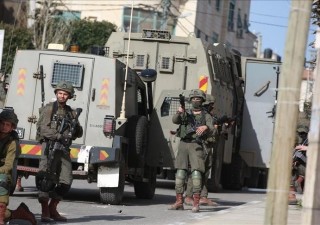
Palestine: Civil space under occupation and internal restrictions
General updates
During the reporting period, violence by Israeli settlers in the occupied West Bank continued to escalate, with significant humanitarian consequences for Palestinian communities. According to OCHA, more than 1,000 settler attacks resulting in casualties or property damage were documented between the beginning of 2026 and mid-June, representing an unprecedented average of approximately five attacks per day. These incidents affected more than 230 Palestinian communities across the West Bank. The deterioration in the security environment, combined with movement restrictions, led to the forcible displacement of approximately 2,200 Palestinians during the first half of 2026, bringing the total number of displaced residents from herding and Bedouin communities since January 2023 to around 6,200 people. In parallel, attacks by settlers and demolition measures continued to undermine access to basic services, with more than 190 water, sanitation, and hygiene (WASH) facilities damaged or destroyed since the beginning of the year.
In a report published in June 2026, the UN Independent International Commission of Inquiry on the Occupied Palestinian Territory documented a pattern of unlawful killings, torture, public executions, and other forms of cruel and degrading treatment carried out by Hamas-affiliated armed groups and security forces against Palestinians between August 2024 and January 2026. According to the Commission, these abuses primarily targeted individuals accused of collaboration with Israel, theft, or political opposition, and were often carried out publicly to intimidate the population and reinforce social control. The Commission concluded that some of these acts may amount to war crimes and emphasized that Palestinians in Gaza are subjected both to the devastating consequences of the ongoing conflict and to repression by the de facto authorities, further restricting their ability to express dissent or exercise their fundamental rights.
On 2 June 2026, the Palestinian Cabinet, led by Prime Minister Mohammad Mustafa, issued a decision instructing the Minister of Local Government to form “steering committees” in local councils where no candidates had run for office. The measure aims to ensure continuity of essential municipal services such as water, electricity, waste management, and infrastructure, and to avoid administrative vacuums in affected areas. The committees, established in coordination with governors and the Ministry of Interior, would temporarily replace elected local councils with appointed administrative bodies. While presented as a technical solution to governance gaps, the decision was criticized by the Civil Coalition for Elections on 15 June 2026, which argued that it undermines the right to local political participation and called for completing delayed municipal elections instead of relying on appointments.
Building on this broader set of electoral and governance reforms introduced in June 2026, another significant legal development followed shortly thereafter.
On 14 June 2026, President Mahmoud Abbas issued a decree-law amending the 2007 Electoral Law and its subsequent amendments. The reform introduces significant changes to the electoral system, including an increase in the number of Legislative Council seats to 200, a lower electoral threshold of 1%, adjustments to candidate list requirements, a reduction in the minimum candidacy age to 23, and strengthened gender quota provisions requiring women’s representation within electoral lists.
On 9 July 2026, President Mahmoud Abbas issued a presidential decree setting 28 November 2026 as the date for Palestinian legislative elections. The decree calls on voters in Jerusalem, the West Bank, and Gaza to participate in direct elections for the Palestinian Legislative Council, in accordance with the electoral law. The date of presidential elections is expected to be announced later for the first quarter of 2027.
Freedom of Association
Reports and statements issued by Palestinian human rights organizations in June 2026, including Al-Haq and the Palestinian Human Rights Organizations Council (PHROC), indicate that the Occupied Palestinian Territory is witnessing an increasingly complex legal and human rights struggle concerning the right to establish and operate associations free from executive and security interference.
Documented reports indicate that civil society organizations operating in the Gaza Strip continue to face a distinct pattern of restrictions characterized by administrative interference and closure outside the framework of the rule of law. Executive authorities in Gaza have, in numerous cases, issued administrative decisions dissolving the governing boards of associations, forcibly merging organizations, or closing their offices under the pretext of administrative restructuring or alleged incompatibility with the policies of the de facto authorities, without recourse to ordinary judicial procedures. The absence of effective judicial oversight has further enabled the imposition of restrictive measures resulting in the suspension and closure of civil society organizations, particularly those working in humanitarian relief, social welfare, and human rights.
Within areas under Israeli control, human rights reports issued in June 2026 documented what has been described as one of the most severe patterns of unlawful restrictions on Palestinian civil society under international law. Israeli military authorities continued to close and ban Palestinian civil society and human rights organizations, particularly in East Jerusalem, through military orders issued under the 1945 Emergency Regulations, often without fair judicial proceedings and on the basis of undisclosed "secret evidence." Reports published in June and July 2026 by Palestinian digital rights organizations, including Sada Social and 7amleh, further documented the extension of these restrictions into the digital sphere through the blocking of organizations' online platforms, the suspension of social media accounts, and security measures limiting organizations' access to funding and their ability to carry out civic activities.
According to reports issued by the Palestinian NGO Network (PNGO) and accountability hearings organized by the AMAN Coalition for Integrity and Accountability in June 2026, with the participation of the Association of Banks in Palestine and the Palestinian Monetary Authority, the Palestinian banking sector and civil society organizations continue to face an unprecedented financial crisis largely beyond their control. Participants highlighted increasingly complex compliance and counter-terrorism requirements imposed by local and correspondent banks on financial transfers to civil society organizations, resulting in prolonged delays in donor funding and, in some cases, the freezing of bank accounts due to perceived risks associated with humanitarian activities or the intended use of funds. These restrictions coincide with broader pressures affecting the Palestinian banking system, including challenges related to the clearance revenue mechanism and threats to banking relations, further limiting organizations' ability to access funding and meet urgent financial obligations. As a result, many civil society organizations have been forced to reduce, suspend, or delay essential humanitarian and development programmes, including food security, healthcare, and psychosocial support initiatives, despite the rapidly growing humanitarian needs across both the Gaza Strip and the West Bank.
Human rights hearings held on 11 June 2026, with the participation of the Palestinian Ministry of Interior and civil society organizations, highlighted a range of bureaucratic obstacles and restrictive administrative measures affecting the work of civil society organizations. Participants reported significant difficulties in renewing annual licenses and obtaining the certificates of good conduct required for board members, with lengthy security vetting procedures and cumbersome administrative processes delaying access to official documentation needed to open or operate bank accounts. The hearings also drew attention to the restrictive legal framework governing non-profit companies, under which organizations are subject to strict governmental oversight, including mandatory prior approval before receiving or using grants and external funding. In addition, participants raised concerns over limits imposed on operational expenditures, including salaries, rent, and logistics, noting that these spending caps do not reflect the realities and costs of humanitarian work in crisis settings, thereby undermining organizational sustainability, limiting the recruitment of qualified staff, and affecting the independence of civil society organizations.
On 30 June 2026, Israeli forces raided and ordered the closure of the Solidarity Charity Association in Nablus for a period of one year, alleging that the organization supported terrorism. During the operation, Israeli forces searched and damaged the association's premises, confiscated equipment and humanitarian assistance intended for vulnerable families, and issued a military order prohibiting access to or use of the organization's offices. Palestinian officials and civil society representatives condemned the measure, describing it as part of a broader pattern of targeting Palestinian charitable and civil society organizations providing humanitarian and social services.
Freedom of Expression
According to the Palestinian Journalists Syndicate's semi-annual violation monitoring report for 2026, the targeting extended beyond journalists to include media production assets themselves, highlighting the systematic attack on media infrastructure. The report recorded: 22 cases of confiscating or destroying press equipment, 7 cases of raiding homes and media organizations, 3 cases of closing down media institutions, 5 cases of blocking websites. This reflects an effort to weaken the operational capacity of Palestinian media institutions and diminish their ability to cover and report news
During June 2026, digital attacks against Palestinian journalists reached an unprecedented level, with 98 documented violations affecting journalists and media institutions in a single month—almost half the total recorded during the previous three months combined (198 violations). The data also revealed a marked gender dimension. While women journalists accounted for 35% of documented digital violations in April and 43% in May (34 cases), they represented 70.41% of all violations in June, with 69 cases targeting women journalists compared with 29 cases (29.59%) affecting men. Reports indicate that these attacks went beyond online harassment and included systematic restrictions through platform moderation measures. Meta accounted for the majority of actions against journalists' personal and professional accounts, particularly on Instagram (14 violations) and Facebook (4 violations), including account suspensions, page removals, coordinated mass reporting campaigns, and other measures that limited the visibility and reach of media content produced by Palestinian
women journalists.
A report issued by Sada Social at the end of June 2026 and published on 4 July 2026 highlighted an unprecedented surge in digital violence against Palestinian women and women journalists since the beginning of the year. In June 2026, Sada Social documented 235 direct digital violations targeting women, including journalists, field activists, and ordinary social media users.This unprecedented increase represents the highest level recorded since the beginning of 2026. Following an initial increase in March (141 cases; +18%), relative stabilization in April (142 cases) and May (166 cases), June figures shattered all previous records. Violations targeting women alone accounted for 26.37% of all documented digital violations during the month, demonstrating that online gender-based violence has evolved from sporadic incidents into a sustained, organized, and systematic campaign aimed at silencing, intimidating, and excluding women from the digital public sphere. June also witnessed a significant escalation in the methods of online abuse. Violence against women increasingly combined technical restrictions, psychological intimidation, and attacks directed simultaneously at both their professional activities and their gender identity. Verbal abuse represented 48.93% of all violations against women, while hate speech and defamation accounted for 32.44%, targeting the social standing and credibility of Palestinian women activists and attempting to force them into self-censorship and withdrawal from public online spaces by exploiting prevailing social sensitivities.
Journalists in the Occupied Palestinian Territory continue to face severe risks, including deadly attacks while carrying out their professional duties, further undermining freedom of expression and access to independent information. On 20 June 2026, Al Jazeera cameraman Ahmed Wishah was killed in an Israeli airstrike that struck a house in the Bureij refugee camp in central Gaza. Al Jazeera condemned the attack as the deliberate targeting of a journalist and rejected Israeli military allegations that Wishah was affiliated with Hamas, noting that no evidence had been publicly provided to substantiate the claims.