

Latest Updates
Go back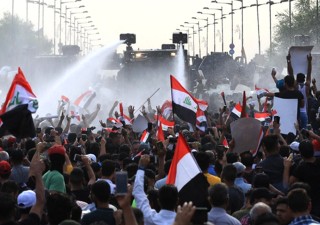
Iraq: Escalating Restrictions on Civic Space, Press Freedom, and Peaceful Assembly
General updates
The reality of the civic space in Iraq is witnessing a state of fragility and continuous contraction in the space available to activists, media institutions and civil society organizations, in relying on the system of penal legislation inherited from the authoritarian era, which includes general formulations in criminalization, which allow broad discretionary powers in application and the possibility of comprehensiveness in its provisions just for political criticism, which makes activists, actors, and opinion-holders, in constant anxiety and fear of prosecution or electronic campaigns led by fake pages and electronic armies that target them for the slightest difference in the Opinion and with the intention of assassinating them morally.
Freedom of association and non-governmental organizations.
The environment continues to put pressure on NGOs and human rights defenders, as they face ongoing restrictions that limit their peaceful activity in the digital expression space, through lawsuits and defamation campaigns, and this confirms that online freedom of opinion is at the forefront of the targeted fields, and that charges of abuse and defamation represent a flexible legal cover for the prosecution of critics in isolation On the fact that the act constitutes a criminal crime or not, especially with the prevalence of the phenomenon of filing lawsuits continuously by figures affiliated with the ruling coordination framework. The Iraqi Observatory for Human Rights also recorded in its semi-annual report for the year 2026, the continuous targeting of women human rights defenders and women in general to the point of violating personal freedom, and in several forms of violations, whether through direct violence or through the state's failure to provide protection and accountability, at a time when official indicators show a sharp rise in domestic violence rates.
Non-governmental organizations continue to object to the decision to include them in tax accountability and the imposition of a direct withholding tax, without paying attention to the fact that the process of funding organizations is usually through donations, grants, and member contributions, and they do not work in the field of economic projects or businesses until they are subject to tax accountability, as non-profit groups, independent of the government, established by individuals to serve the public interest and protect rights , which is not aimed at profit, which prompted the organizations to consider the decision as part of the campaign to restrict civic activity.
Freedom of expression
Hardly a month goes by without the violation of their rights to access the truth or to transmit and analyze the truth, whether through judicial rulings, physical assaults, restriction of freedom of movement, or suspension of work, and the emergence of a new situation represented in preventing media figures and opinion holders from appearing in the media based on what they publish on their personal pages, which contradicts the limits of the authority's powers under the media broadcasting regulations, according to the report of the Association for the Defense of Press Freedom and as follows. It comes :-
1. Cases of judicial ruling. A judicial verdict was issued in absentia against the presenter of the programs and journalist Qahtan Adnan on 9 June 2026 that includes imprisonment for one year based on the provisions of the Penal Code Article (433 / Crime of Defamation), the decision came based on a judicial complaint from the leader of the Reconstruction and Development Coalition, Adnan Al-Danbus.
2. Suspension of work or banning programs. A decision was issued by the Media and Communications Commission on 28 June 2026 to ban the appearance of the presenter and journalist Ahmed Mulla Talal for three months against the background of publishing a post on his personal account on the (Facebook/Meta) platform about the participation of the Iraqi team in the 2026 World Cup, in which the Commission considered that the publication included an insult to the Iraqi state, as it considered it (the failed state) to be in violation of the regulations of media broadcasting rules. The judiciary supported the ban decision against Mullah Talal after his objection before the hearing board of the Commission, which prompted the journalist to publish statements by politicians and the head of the Media and Communications Commission, Baligh Abu Kalal, who issued the decision, which include words that do not differ much from his publication, accusing the Commission of double standards and lack of neutrality.
3. Cases of physical assault and preventing media coverage. The team of the (Esta Media Network) was attacked on 9 June 2026 by the security force in charge of protecting the Kurdistan Region Council of Ministers building, and the network published a video that included the protection personnel attacking the channel's team, consisting of the reporter Diyar Hussein and the cameraman Rubin Ali, during the coverage of the protests of the survivors of the Anfal campaigns in front of the Council , and the security force's argument was that it was not possible to film in front of the Kurdistan Region Council of Ministers.
4. Evacuation of the office of the NRT satellite channel. The security forces in the Kurdistan Region of Erbil evacuated the canal's office and confiscated its equipment on 20 July 2026, under the cover of a lawsuit for non-payment of rent, as a decision was previously issued in February to prevent the channel from operating in the region under the pretext of violating national symbols, according to the governor's statement, in what the channel and the human rights circles consider the subject of storming the canal and evacuating the office Legal exploitation to tighten the noose on its media activity, especially since the lawsuit was filed on 16/7/2026 and the eviction decision was implemented on 20/7/2026, where the speed of the procedures was considered an indication of the exploitation of political influence against the channel.
5. The reporters of the (Kurdisat) news channel were exposed while working on a report on the dialysis center in Erbil, after receiving complaints from a number of citizens and patients in the center about the poor condition of the dialysis machines, and demanded that their voices be transferred to the media, where the General Directorate of Health in Erbil, the director of the center, and the Directorate of Health Information in Erbil refused to cooperate with the team and prevented it from visiting the center (Baryar Mohamed and the media team), while covering directly outside the center, threats, insults, verbal abuse and attempts to obstruct their professional work, according to a statement issued by Reporters for Rights and Development (Reporters for Rights and Development) operating in the region.
Freedom of peaceful assembly.
The mechanisms for dealing with popular and professional demonstrations are still not governed by a clear legal framework in light of the application of the Organizing Coalition Authority (Freedom of Assembly and Demonstration) issued by the civilian governor Paul Bremer in 2003, where the legislative system failed to establish legal rules suitable for the democratic transition for two decades, as the same version of the demonstration bill was repeatedly sent since 2010, which faced popular and human rights rejection every time it was reintroduced due to its restriction of rights, which kept the framework The legal system is governed by texts that set the period of the presence of the American military forces, so we find that every time the security forces fail to deal professionally with the demonstrations, as they are dispersed only by the use of violence, which leads to injuries among the civilian demonstrators, and several demonstrations have taken place for various reasons, including:
1. On 27 June 2026, security forces in the city of Kut launched a wide campaign of raids and arrests targeting activists and demonstrators participating in popular protests demanding improved electricity service, while security forces at the entrance to the capital prevented the entry of Babil demonstrators to protest in central Baghdad, as they were on their way to demonstrate in front of the Green Zone to demand the provision of electricity, where injuries and cases of forced dispersal using force have been documented , according to a statement by the Iraqi Observatory for Human Rights Activists and demonstrators were subjected to smear campaigns, cyber threats, and field pursuits, forcing some of them to leave their homes and internally displace to avoid arrest, according to the head of the Council for Rights and Freedoms (former MP Sajjad Salem).
2. The women affected by the amendment of the Personal Status Law held two demonstrations, one in Tahrir Square and the other in front of the Supreme Judicial Council to demand the prevention of the retroactive effect of the application of the Jaafari Status Law on divorce cases that took place before its implementation and the retention of the custody of the children with the mother. Nevertheless, women who decide to take to the streets in Iraq face challenges that have multiplied with the spread of social media, as one of the protesters who revealed her face to the media was subjected to an electronic campaign by publishing fabricated and immoral clips on social media.