

Latest Updates
Go back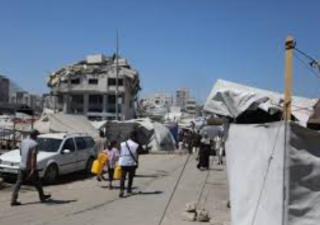
Palestine: Challenges facing the work of Palestinian NGOs
Freedom of Association
The Palestinian NGOs Network (PNGO) released a statement addressing concerns over restrictions in the local elections law. On 5 February 2026, PNGO and other civil society organizations issued a press statement expressing serious concern over the Decree-Law on Local Elections and its subsequent amendments. While the removal of the obligation for candidates to commit to the Palestine Liberation Organization’s international obligations was welcomed, the law still requires adherence to the PLO’s political and national program, creating restrictions on political participation. Key issues include the failure to guarantee a 30 % quota for women, high financial deposits for candidacy, and the Minister of Local Government’s authority to appoint council heads.
The Palestinian NGOs Network (PNGO) study, "Palestinian NGOs' Interventions in the Gaza Strip and the Challenges Facing Their Work" (March 2026), highlights the severe constraints on freedom of association and the operational challenges faced by Palestinian humanitarian NGOs during the war on the Gaza Strip. Organizations were subjected to direct targeting, destruction of facilities, and attacks on staff, severely limiting their ability to operate safely and independently. Strict movement restrictions, fragmented access, and disrupted supply chains hindered the delivery of services and comprehensive needs assessments, while interruptions in electricity, internet, and basic infrastructure further undermined coordination, communication, and planning. Financial instability, interrupted funding, and administrative barriers compounded these challenges, particularly amid rising emergency operating costs. Humanitarian teams endured extreme physical and psychological pressure, with displacement, casualties, and staff shortages affecting performance and sustainability.
Building on these concerns about restrictions on Palestinian civil society and humanitarian work, access to humanitarian aid in Gaza and the West Bank has also been increasingly constrained, placing vulnerable populations at heightened risk. On 24 February 2026, Human Rights Watch reported that Israeli authorities are blocking numerous international aid organizations from operating in the region, threatening access to lifesaving services. At least 37 organizations, including Médecins Sans Frontières, Oxfam, the Norwegian Refugee Council, and Save the Children, were asked to provide detailed staff lists and personal data, which they refused, citing concerns over worker safety and the need to maintain neutrality. So far, only 27 organizations have been approved under these requirements, and if the barred groups are forced to halt operations, up to one in three health facilities could close, potentially leaving 20,000 patients without care and exacerbating shortages in water and sanitation services.
Freedom of expression
Concerns have emerged over internal editorial independence and alleged political pressure within a leading international human rights organization. On 3 February, Amnesty International reported that two senior Human Rights Watch (HRW) experts, Omar Shakir and Milena Ansari, resigned after alleging that the organization halted publication of a report addressing Israel’s denial of the Palestinian right of return, which the draft characterized as a crime against humanity. In public resignation letters, they claimed the decision departed from standard editorial procedures and reflected concern over potential political backlash. Shakir stated that internal discussions suggested fears the report could be portrayed as threatening Israel’s demographic character. HRW responded that it remains committed to the right of return for Palestinians but paused the report because it determined that parts of the research and legal analysis required further strengthening, adding that the review process is ongoing.
Press freedom faced a significant escalation amid measures restricting Palestinian media outlets. On 23 February 2026, Israel’s Defence Minister issued a military order banning five Palestinian online media platforms — Al-Asima News Network, Al-Quds Compass, Maydan al-Quds, Miraj Network, and Quds Plus — designating them as “terror organisations” under counter-terrorism laws and accusing them of incitement. The decision forced at least one outlet to suspend operations and exposed journalists to warnings and potential legal consequences. The International Federation of Journalists (IFJ), the Palestinian Journalists’ Syndicate (PJS), and the National Union of Journalists (NUJ) condemned the measure as a serious attack on media freedom. As IFJ General Secretary Anthony Bellanger stated, the ban “represents a significant escalation in efforts to restrict media pluralism and control the narrative.”
The ban formed part of a wider escalation against Palestinian media documented during February. In fact, the Palestinian Centre for Development and Media Freedoms (“Mada”) documented 65 violations of media freedom affecting Palestinian journalists and outlets in February 2026, the large majority (86 %) attributed to Israeli authorities. These incidents included arrests, detentions of reporters, orders to ban or expel journalists from key sites like Al-Aqsa Mosque and repeated obstruction of field coverage for TV crews and reporters. Journalists were also held at checkpoints, fined, and barred from working, while in some cases their equipment was seized. In addition, a small number of violations by Palestinian forces and social media platforms were recorded, such as arrests during protests and removal of media channels online.
Palestinian journalist Amal Shamaly, who worked as a correspondent for Qatar Radio, was killed on 9 March 2026 in an Israeli airstrike targeting tents sheltering displaced civilians in central Gaza. The strike, near the village of Az‑Zawayda, also claimed the lives of two others and left at least ten people injured. This incident occurred amid a surge of Israeli airstrikes across Gaza, following a renewed escalation in hostilities involving the U.S., Israel, and Iran, and came just hours after additional deadly strikes in Gaza City.
Freedom of peaceful assembly
Freedom of expression and civic mobilization in the West Bank faced restrictions as Palestinians protested alleged mistreatment of prisoners in Israeli detention. On 10 February 2026, families, civil society groups, and political factions held demonstrations in Ramallah and Tulkarm, including sit-ins outside International Red Cross offices, calling on the international community to address prison abuses and protect detainees’ rights.
On the same day, Palestinian communities inside Israel staged protests to express anger over rising crime and insufficient security measures. Residents in several towns organized demonstrations to demand stronger policing and protection from organized violence, emphasizing frustration with what they viewed as governmental inaction.
Following widespread detentions, residents in the West Bank organized protests to voice opposition to what they described as arbitrary and heavy-handed actions by Israeli forces. On 3 March 2026, security personnel carried out operations across Qalqilya, Ramallah, Hebron, Nablus, Bethlehem, and East Jerusalem, taking into custody approximately 40 Palestinians, including young people, previously imprisoned individuals, and women, while conducting home searches and questioning. The demonstrations took place in locations such as Dheisheh and Jalazoun refugee camps, where locals blocked streets and gathered in public areas to call for the release of those arrested and to highlight restrictions on movement and political expression.