

Latest Updates
Go back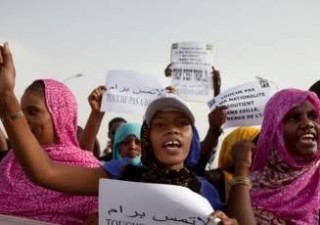
Mauritania: Between the expansion of civil society and the decline of civil liberties
Freedom of Association
Since the adoption of Law No. 04/2021 on associations, organizations and networks, significant measures have been introduced to facilitate the creation of associations. The procedures for establishing associations remain simple and relatively straightforward. During the months of June and July, 155 non-governmental associations were established and registered on the civil society platform.
Since the adoption of the law on organizations, associations and networks (FEDDAM), the number of authorized associations has exceeded 11,176, in addition to 27 networks of non-governmental associations, 29 organizations, and 45 mutual-aid associations. Compared with the country’s population of approximately 4 million inhabitants, these are relatively high numbers.
Freedom of Expression
Over the past two decades, Mauritania has made considerable progress in the area of freedom of expression and freedom of the press, following the revision of the press law and the liberalization of the audiovisual sector. During this period, bloggers, the press, and individuals expressing their opinions freely were able to benefit from greater freedom of expression. However, this situation has deteriorated with the adoption of new laws, such as the Cybercrime Law and what is also known as the “Symbols Law.”
During the months of June and July, the media and political landscape remained tense as a result of the repercussions of a live broadcast on the Facebook platform, at the beginning of April, containing remarks that the authorities considered offensive toward the President of the Republic, Mohamed Ould Cheikh El Ghazouani, while human rights organizations considered them to fall within the scope of political expression. Following the broadcast, the police arrested Member of Parliament Mariem Cheikh Samb Djing in early April, before arresting her colleague Ghamou Achour Salem in the middle of the same month for repeating the same remarks. The two MPs were referred to the courts. The Nouakchott-West Wilaya Court issued its first-instance ruling in early May 2026, finding them guilty and sentencing them to four years in prison for offenses related to undermining national symbols. This case reignited a vigorous debate over the limits of freedom of expression, parliamentary immunity, and the limits of presidential intervention in matters falling within the jurisdiction of the judiciary.
Freedom of Peaceful Assembly
The right to peaceful assembly and demonstration in the country is still not exercised in accordance with the guarantees provided for by the country’s Constitution of July 20, 1991. Government authorities continue to require prior authorization for any demonstration or peaceful movement, including those organized by legally recognized organizations and political parties. However, obtaining such authorization is not easy and remains dependent on the decision of local authorities. Furthermore, bloggers and unauthorized gatherings continue to face legal proceedings.
In the context of the broadcasts made by the two MPs, their arrests and their subsequent convictions, dozens of their supporters gathered on July 1 in front of the courthouse to raise slogans of solidarity and call for the annulment of the judicial and political proceedings brought against the two MPs. Police units forcibly dispersed the demonstrations around the courthouse in order to prevent the gatherings, and the protests were suppressed. During the same period, opposition parties in the city of Nouadhibou were also subject to restrictions.