

Latest Updates
Go back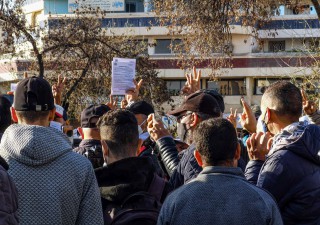
Morocco: Growing challenges to freedom of expression, organization, and assembly
Freedom of association:
Espace Associatif organized a consultation meeting on July 28, 2026 on "A discussion on the demands of the Moroccan associational movement for an environment conducive to the work of civil society organizations", which saw the participation of a group of Moroccan associations and coalitions and networks, where the most important problems and constraints suffered by the latter were discussed, on top of which is the inability of many associations to obtain the legal filing receipt, which constitutes an important legal document for the work of associations. The meeting also concluded with an agreement to launch a coordinated advocacy initiative aimed at improving the enabling environment for civil society organizations. The initiative will be led by Espace Associatif in coordination with civil society actors working on these issues.
Freedom of Expression:
At the beginning of the reporting period, judicial measures related to protest activities raised concerns regarding restrictions on public expression and civic mobilization. On 12 June 2026, a court in Casablanca sentenced 18 individuals to prison terms for their participation in last year’s youth-led “Gen Z” protests. The defendants were convicted of obstructing traffic during demonstrations that had called for reforms in public services, particularly in the education and healthcare sectors. Sentences varied, with most receiving short prison terms, some of which were effectively covered by pre-trial detention. The case forms part of a broader wave of prosecutions linked to the Gen Z protest movement, which has seen thousands of individuals investigated or prosecuted following demonstrations driven by socio-economic grievances and demands for reform.
During the same period, concerns over the use of criminal proceedings against journalists and media professionals continued to emerge. On 30 June 2026, the Rabat Court of Appeal upheld the 18-month prison sentence imposed on journalist and editor-in-chief of Badil.info, Hamid El Mahdaoui, as well as a compensation order of 1.5 million Moroccan dirhams payable to Justice Minister Abdellatif Ouahbi. The case stemmed from a complaint filed after El Mahdaoui publicly raised allegations linking the minister's political party to a high-profile criminal case. He was convicted on charges including disseminating false information, defamation, slander, and public insult, raising renewed concerns about the chilling effect of criminal proceedings on independent journalism and public debate.
At the legislative level, July 2026 also witnessed developments related to the regulation of the media sector. On 6 July 2026, the House of Representatives adopted two draft laws aimed at reforming the legal framework governing the press and media sector: Draft Law No. 27.25 amending and supplementing Law No. 89.13 on the Statute of Professional Journalists, and Draft Law No. 013.26 amending and supplementing Law No. 2.00 on Copyright and Related Rights. The adoption of these texts represented a new step in the reform of the media regulatory framework and generated discussion among professional and human rights actors regarding their content and potential implications for press freedom.
Following these legislative developments, additional cases involving journalists and public figures further highlighted concerns regarding the criminalization of expression. On 12 July 2026, independent journalist Ali Lmrabet was detained upon his arrival at Tangier Airport pursuant to an order issued by the judicial authorities. The arrest is linked to an ongoing investigation into several complaints accusing him of defamation, slander, and spreading false information through his online publications.
Later in July, the prosecution of individuals for their public statements and artistic expression continued to draw attention. On 13 July 2026, Moroccan rapper Mehdi El Youbi was arrested and placed in pre-trial detention pending trial on a charge of insulting a constitutional institution. Amnesty International considered the case to fall within the framework of criminalizing peaceful expression and called for the criminal law not to be used to punish expression. The case was also marked by the launch of a solidarity petition signed by a number of politicians, human rights defenders, academics, and artists.
Finally, on 23 July 2026, another case involving a human rights defender raised concerns among civil society actors regarding freedom of expression and human rights advocacy. The Court of First Instance in Rabat sentenced lawyer Farouk El Mahdaoui, Vice-President of the Moroccan Association for Human Rights, to a three-months suspended prison sentence, a fine, and civil compensation. The ruling provoked reactions from several human rights organizations, which considered the case to be linked to the exercise of freedom of expression and the defense of human rights.
Freedom of peaceful assembly:
Concerns regarding the continued detention of Hirak Rif activists and the stigmatization of their families remain a subject of mobilization among Moroccan civil society actors. In this context, on 7 June 2026, a solidarity convoy composed of women human rights defenders, lawyers, academics, journalists, and civil society activists travelled to Al Hoceima to express support for the families of individuals detained in connection with the Hirak Rif movement and to renew calls for the release of the remaining detainees, including movement leader Nasser Zefzafi. Participants also denounced online harassment and defamation campaigns targeting relatives of detainees, particularly after public expressions of solidarity and advocacy on their behalf.
On 15 July 2026, human rights defenders and civil society activists staged a protest in front of the Parliament in Rabat against the continued restrictions on the rights to freedom of association and peaceful assembly. Participants called for an end to violations of the fundamental freedoms guaranteed by the Moroccan Constitution and international human rights standards. The protest followed a call by the Network of Organizations Affected by Restrictions and Bans, which urged political parties, trade unions, human rights organizations, civil society associations, and all defenders of democracy and human rights in Morocco to participate. The Network, which brings together political, trade union, and human rights organizations, denounced the restrictions imposed on its members' right to organize and assemble. It stated that the protest was organized in response to what it described as an arbitrary repressive policy aimed at restricting civic space, particularly targeting organizations because of their positions, field activities, and criticism of public policies.