

Latest Updates
Go back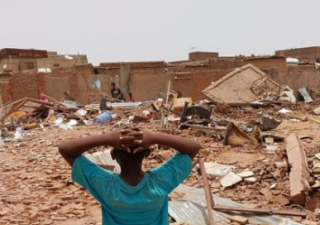
Sudan: Serious violations of international humanitarian law
General updates
The ongoing conflict in Sudan continues to expose civilians to serious violence and violations of international humanitarian law. In mid‑February 2026, the UN High Commissioner for Human Rights raised serious alarm after reports that more than 50 civilians were killed in drone strikes over the course of two days in several Sudanese states, underscoring the devastating impact of aerial warfare on non‑combatants. Between 15 and 16 February, strikes allegedly carried out by both the Sudanese Armed Forces (SAF) and the Rapid Support Forces (RSF) hit markets, displacement shelters and other civilian locations, resulting in dozens of deaths—including many children—and numerous injuries. The High Commissioner condemned the escalating use of drones in populated areas, warning that repeated attacks on markets, schools, health facilities and shelters are contributing to a deepening humanitarian crisis and must be stopped to protect civilians. The UN High Commissioner for Human Rights expressed renewed concern in March 2026 over a surge in deadly drone attacks in Kordofan and White Nile states, which reportedly killed more than 200 civilians, highlighting the escalating risks to non-combatants in conflict-affected areas.
The Kordofan region continues to stand as a key battlefield between the SAF and the RSF as both sides compete for control of strategic towns and supply routes. On 6 March 2026, the Sudanese army announced that it had retaken the city of Bara in North Kordofan, a strategically important town previously used by RSF forces to launch attacks toward the regional capital, El-Obeid. Military sources reported that during the operation, army forces destroyed dozens of RSF vehicles and killed multiple fighters in clashes supported by air and drone strikes. The advance is expected to help secure El-Obeid and strengthen the army’s position in the region amid ongoing fighting.
On 11 March 2026, a drone strike in the Al-Rawaga area of West Kordofan reportedly killed more than 40 civilians, including women and children. The attack targeted a civilian area and caused significant casualties among local residents. The incident has raised serious concerns over the continued use of drone strikes in populated areas and the growing risks to civilians amid the ongoing conflict. On the same day, a drone strike hit a secondary school and a nearby health center in the village of Shukeiri in White Nile State, killing at least 17 people, most of them schoolgirls. Several others were injured, and local sources reported that the victims also included teachers and a health worker, while there was reportedly no military presence in the area at the time of the strike.
In parallel, recent developments have also included international policy actions related to the conflict. On 12 March 2026, the United States designated several Sudanese Islamist militias linked to the SAF as terrorist groups, citing their role in fueling the ongoing conflict and regional instability.
Freedom of association
Civic space in Sudan has continued to narrow, with recent administrative measures restricting the ability of civil society organisations to operate. In late February 2026, Sudanese authorities took steps that significantly undermined the operational space for civil society organisations. On 26 February, the Humanitarian Aid Commission, the Council of Ministers, and the Registrar General of NGOs issued a directive that revoked the legal registration of four local non‑governmental organisations—the Darfur Victims Support Organisation, Kayan Organisation for Women’s Empowerment and Peace Building, Enjaz Organisation for Gender, Humanitarian Aid and Development, and the Union of Darfuri Scholars and Experts. The cancellation of their registration effectively halted their ability to function, as government bodies were instructed to cease engagement with them, but no official reasons were provided for the decision.
Freedom of expression
Internet access in Sudan continues to be severely disrupted due to ongoing conflict and repeated attacks on telecommunications infrastructure. These outages and partial shutdowns are preventing citizens, journalists, and humanitarian actors from communicating, accessing information, and reporting on events in real time.
Press freedom in Sudan has come under increasing strain as journalists face arbitrary detention and disappearances amid the ongoing conflict. On 7 February 2026, the Sudanese Journalists Syndicate called for the immediate release of reporter Muammar Ibrahim, who had been held by the Rapid Support Forces (RSF) for over 100 days without formal charges or access to legal counsel. Then, on 5 March 2026, authorities in Nyala, South Darfur apprehended three female journalists during security operations; in the same incident, several women activists were also detained following their participation in a workshop on women’s rights, prompting criticism from human rights groups who demanded their immediate release and highlighted the broader repression of civic actors. By 8 March 2026, the Syndicate reported that numerous media workers remained either missing or in custody, underscoring the heightened risks faced by those reporting on or engaging in civil society activities in conflict-affected areas.
Freedom of peaceful assembly
Residents and local activists in Wadi Halfa protested on 8 March 2026 against a newly announced housing development plan that they said threatened ancestral land rights and the region’s cultural identity. Dozens gathered outside local government offices, submitting a formal memorandum demanding the plan’s cancellation and calling for meaningful consultation with affected communities, while authorities indicated the proposal would be reviewed at the state level.